Curation Work
Home
Mother Altars
Urban Projects 1
Urban Projects 2
Outdoor stone
Earth Works
Environmental Art
Gallery Works
Wood Works
Other Materials
Photography
Resume (C.V.)
Reviews and Biblio
Contact & Catalogue
Curation Work
Feb-Nov 2010. Curator of the exhibition "Generations Gathering" by the Green Gallery Group- open air gallery for environmental Art at Park Dina, Arsuf. www.greengallery.co.il.


2009. Curator of the exhibition "Between Sky and Earth" by the Green Gallery Group- open air gallery for environmental Art at Park Dina, Arsuf. www.greengallery.co.il.


Text for the Exhibition "Between Sky and Earth".
A year after the first exhibition, the GGG group presents a new exhibition titled “Between Sky and Earth”. The name is common and trivial, but expresses a truth about the exhibition: its location in the open fields of Arsuf Kedem, and the artists’ position in the world of Israeli art.
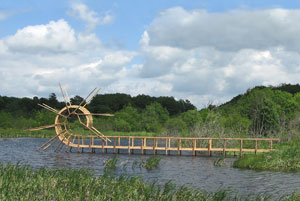
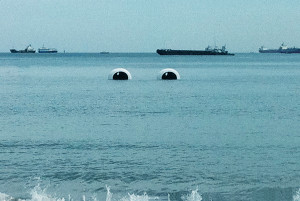
Among the dozens of creations spread in the field, one can find "The New Broom" by Daniel Manheim, sweeping the sky and expressing the wish for spiritual correction, "The Seeds" by Ada Moran Reiss forming "spheres” in galactic space, and the red Bush titled "The Burning Bush" by Gila Croker, representing the famous biblical bush.

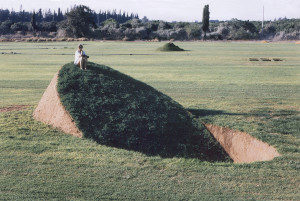
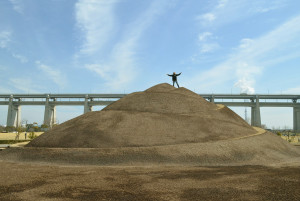
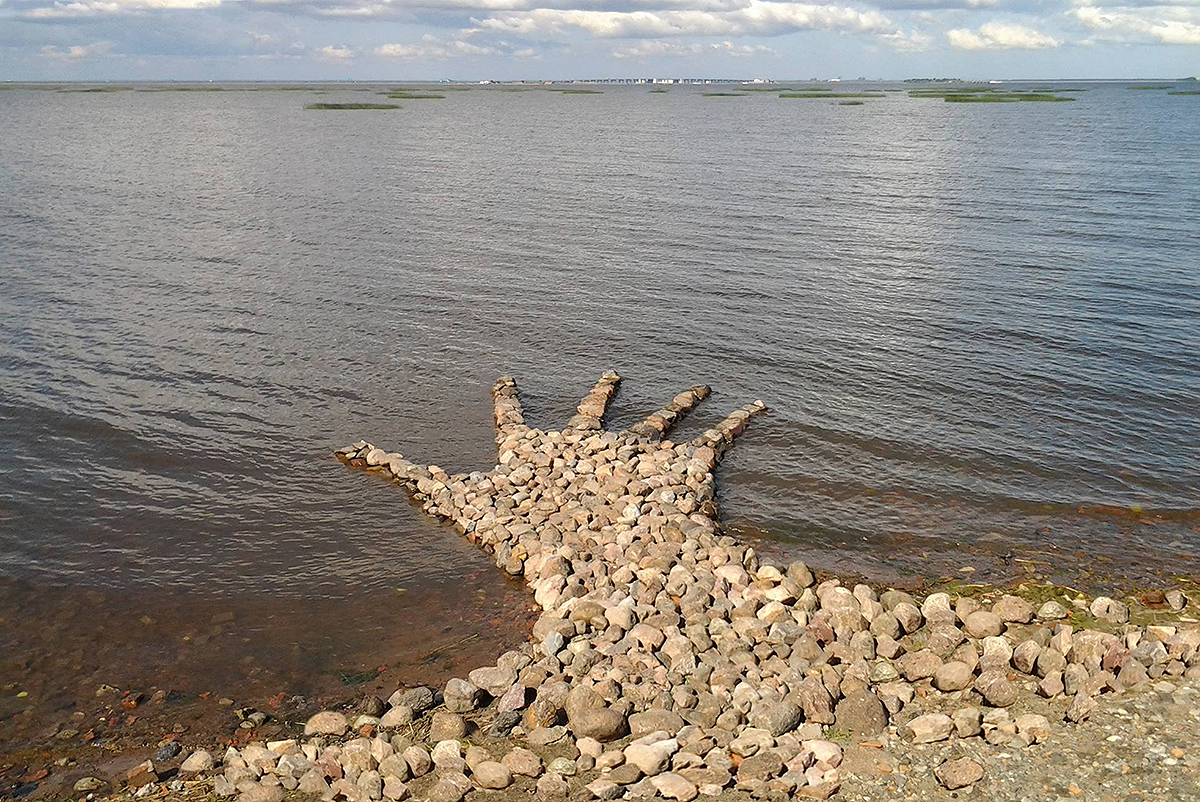
One can also see the soil piles created by Ella Beit Halahmi, which are the remains of the whale that had swallowed Jonas, recently discovered on a Mediterranean beach, and the large upward pointing udders – the Answer to the gift of life granted to us by the supreme creator.
When an artist creates, he or she expresses their viewpoint, and defines a position within the social and cultural space as well as a location between sky and earth, between the physical and metaphysical. These two terms – sky and earth – form a dichotomy, but also express two opposing concepts that lead to harmony, and form our own position here on earth. The greater the distance between the two poles, the stronger their unifying force. Traditional is the opposite pole for revolutionary, and both can coexist in one artistic creation.
The more personal the statement, the more it touches all of us. In art, the national can also be international. A personality defining itself as “I” exists simultaneously in all of humanity. The Green Gallery Group declares, together with the Austian poet Kostach Hatgorov:

“The world is my temple
love is my holiness
the universe is my native land”

The plastic language of the group’s guest artist from New York, Avital Oz, identified with the minimalism and rationalism characteristic of the eighties, is different from that of the GGG creations, which can be called "Site Specific". But his work can easily integrate harmonicly between the sky and earth at the Dina Park in Arsuf Kedem.


Tanya Preminger, curator.
  2007-2008. Curator of the exhibition "Sprouts" of the Green Gallery Group- open air gallery for environmental Art at Park Dina, Arsuf. www.greengallery.co.il.


Text for the Exhibition "Sprouts".
“A person is but a pattern of their homeland,” said Shaul Tshernihovsky. And this can be said about art as well. It consists of impressions left by time and place, impressions of land, scenery and people. The character of the land on which we grow, its nature and scenery, are all absorbed into our consciousness, processed, and then find outlet in our artistic creation.

War and conquests do not make up a people. Culture and art do. They bestow people with spiritual values, and create common understandings, bring about the discerning of right from wrong. They are the ones that strengthen man’s connection to their homeland and define to him the laws of the universe.

In the fields of Arsuf we grow art.
The artists of the Green Gallery Group are united by the aspiration to strengthen the connection of the people to nature and the land, both physically and spiritually. Our creations are presented on the ground, in the open. They are made of natural materials, but moreover, they speak of concepts taken right out of nature. Of the identical laws governing nature and man, of the circle of life common to both. Out of the earth spring out the sprouts. They grow, flourish, breed, wither and die. Seasons come and go, reflecting our own time cycles.

The work “Too Bad” by Danny Manheim is not a flowerpot tipping over, but a story of life and death. The statue “Earth and Heaven” by Ada Moran-Rice surprises us with a piece of sky at a time when we face the earth. “Laundry” by Eli Ben Aviv is a humoristic creation, where tree branches - earth’s garments, hanged like laundry. Gilla Crocker, in her work “Static System”, reminds us of the similarity between molecules and the solar system. Ella Beit Halahmy created a “Limpha” – an imaginary monster where pipes formerly feeding the fields now flow life into the creature’s body.

More and more people live in an urban, virtual world, and getting closer to the basic sensations of touching the earth, smelling it, sensing its texture, has become a rare commodity. The connection to earth is a basic, primary need, without which the delicate balance of man is violated. Just like a plant needs to spread its roots inside the earth, so does man.

We do hope our work shall bring people closer to nature, providing them with spiritual Oxygen.


Tanya Preminger, curator.

 
  2006. Curator of an exhibition by "Bat-Ami Helerman, "Between Past and Present" at "The artists House" in Jerusalem.


Text for the exhibition: "Reality Show".

The recent works by Bat-Ami Helerman are not easy to define. Although she uses ready made objects, such as many of her predecessors – Marcel Duchamps, Max Ernst or Israeli Philip Renzer – but one cannot refer to Bat-Ami's works as "Ready Made" or "Installations".

Despite Bat-Ami's use of ready made elements, the main component of her works are items made of stone, that are amazingly life like. Stone has been a traditional sculpting material for generations, but is not perceived as contemporary and does not appear in modern art together with ready made objects, especially not in the service of realistic images, as used by Bat-Ami.

Bat Ami knows there is "No parallel between the element of surprise in art and in life" (1) and therefore makes use of two types of objects: real objects, and stone-made "life like", "as if" objects that contradict the real objects. This is the contrasting effect required for artistic surprise. The comparison between the stone-made objects and the ready made objects in a realistic surrounding creates the "Necessary distance from reality to create the artistic value" (2).

If we agree with formalists that "Art is a method" (3), then Bat-Ami's method is to cause the stone in her works to be perceived as a concept and not as a material. The values of eternity, strength, closeness to earth, artistry and other characteristics related to stone, pass from the stone into the object it is expressing.
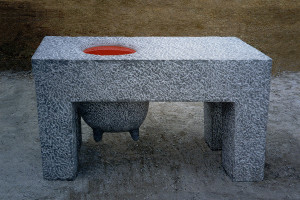
The work titled "Macho" shows a granite accouterment laden with masculine gadgets. The granite graces the accouterment with eternity awarding it a universal symbol of disarmament.
Another work titled "The Little Black Dress" shows a granite dress just disrobed, expressing life while the box onto which it is strewn is perceived as a coffin.
The work titled "Wedding" shows bridal items carved in marble, which conveys the purity of the ancient tradition. "Brands" is a stone coat covered with brand names, cold and valueless compared to genuine warm, live fur.

The contradictory effect between real and conceptual objects, between life and art, between truth and non truth, is what Bat-Ami is dealing with in her works.
The subject of "In Between" (4) has been the occupation of many, ranging from sculptor Anish Kapur through to poet Arkady Duchin ("Between counterfeit and truth, between whatever lives and is dead") and others of the artists and scientists community.

"Art is the means of uniting two principles – the pleasure principle and the reality principle" (5). Don’t be misled by the "Reality Show" of objects apparently placed at random by Bat-Ami. Stone brings with it depth, time, place and layers of meaning that are as long as is the history of mankind and art.


E. G. Lessing. S. 48 E. S. Bigodsky, "The Psychology of Art" B. Shakalovsky, "Art as a Method" Homi Baba and Anish Kapur – A Conversation" Tel Aviv Museum Catalog S. Freud, "Psychoanalytic Theory: An Exploration of Essentials"


Tanya Preminger, curator.
2002 Solo exhibition of Bat-Ami Helerman."Clothing". "Efrat" Gallery, Tel-Aviv, Israel.
2000 "The Artist at it's home" - Stone Works". "Studio 7 artists", Israel.
1997 "Amalia Arbel" Gallery, "Studio 7 artists", Israel.
1995 "Coexistence" "Horst Richter" Gallery. Jaffa, Israel.
1995 "Acquaintance" "Studio 7" exhibition. "Horst Richter" Gallery. Jaffa, Israel.
Tanya Preminger Email: tpreminger@gmail.com